When Cancer Treatment No Longer Means Surgery
In the public imagination, treating cancer seems to mean only one thing: cutting it out. When surgery isn't an option, people often lose hope. But there is another way — one that has been evolving for over a century. It doesn't involve bleeding, anesthesia, or incisions. Yet it can target tumors with precision equal to or exceeding surgery. This is radiation therapy, and it's transforming oncology care.
Radiotherapy stands alongside surgery and chemotherapy as one of the three pillars of cancer treatment. Yet public awareness of radiotherapy lags far behind the other two. Today, through the lens of advanced radiotherapy, let us introduce you to this "invisible scalpel" — and how it's giving hope to patients for whom surgery is not an option.
At the center of this story is HYGEIA Healthcare's Gyro Knife stereotactic radiotherapy system — a technology that is making precision, non-invasive, and affordable cancer treatment a reality for patients across China and beyond.

Stereotactic body radiotherapy (SBRT): Precision beams converge on the tumor target while sparing surrounding healthy tissue.
"I lay on the treatment bed in my regular clothes, no anesthesia, no pain. When my family asked if it hurt afterward, I smiled and said — it felt just like getting a CT scan."
The Role of Radiotherapy in Cancer Care
Over 70% of Cancer Patients Need Radiotherapy
According to international statistics, more than 70% of cancer patients require radiotherapy at some point during their treatment journey. About half receive curative-intent radiotherapy (aimed at complete tumor elimination), while the other half receive palliative radiotherapy (to relieve symptoms, prolong survival, and improve quality of life).
Radiotherapy is not limited to early-stage cancers. It plays a vital role in the comprehensive treatment of advanced disease:
- Primary treatment: For radiation-sensitive tumors such as nasopharyngeal carcinoma, early laryngeal cancer, cervical cancer, and prostate cancer
- Neoadjuvant therapy: Shrinking tumors before surgery to improve resectability
- Adjuvant therapy: Eliminating residual microscopic disease after surgery
- Palliative care: Relieving bone metastasis pain, decompressing brain metastases, and managing superior vena cava syndrome
Who Can Benefit from Precision Radiotherapy?
The Gyro Knife is not a cure-all — but it offers irreplaceable advantages for specific patient groups:
- Early-stage inoperable solid tumors: For early non-small cell lung cancer (NSCLC), NCCN guidelines explicitly recommend curative SABR (the same category of technology as the Gyro Knife) for Stage I and node-negative Stage II patients who cannot tolerate surgery
- Oligometastatic disease: Stage IV patients with 3–5 oligometastases can achieve excellent local control through Gyro Knife high-precision radiotherapy
- Tumors in challenging locations: Brain metastases, hepatocellular carcinoma (HCC), pancreatic cancer, prostate cancer, and pelvic recurrences
- Patients who cannot undergo surgery: Elderly patients or those with comorbidities such as hypertension, heart disease, diabetes, or renal insufficiency
Why Chongqing HYGEIA Hospital's Radiotherapy Stands Out
"We Build the Knife Ourselves"
This is what sets HYGEIA apart from virtually every other radiotherapy provider. HYGEIA Healthcare Group is the original developer and manufacturer of the "Gyro Rotating Cobalt-60 Stereotactic Radiotherapy System" (widely known as the Gyro Knife), holding fully independent intellectual property rights. The Group integrates large-scale medical device R&D, manufacturing, and hospital network operations under one roof. HYGEIA Healthcare Holdings Co., Ltd. is listed on the Hong Kong Stock Exchange (HKEX: 6078).
The Gyro Knife has been recognized as a Key National New Product by four national ministries including the Ministry of Science and Technology, and the digital Cobalt-60 precision radiotherapy system was awarded the National Science and Technology Progress Award (Second Prize).
The Expert Team: Led by National Training Center Leaders
Chongqing HYGEIA Hospital's radiotherapy team is anchored by experts who don't just practice — they set national standards:
Dr. Wan Yue
Director of Radiation Oncology
Former senior radiotherapy specialist at Chongqing University Cancer Hospital. Specializes in stereotactic radiotherapy for complex-location tumors. With decades of clinical experience, Dr. Wan brings academic medical center rigor to HYGEIA's patient-centered approach.
Dr. Luo Kuo
Director, National Gyro Knife Training Center
Responsible for establishing national operating protocols and training certification standards for Gyro Knife technology across China. Dr. Luo leads multidisciplinary tumor (MDT) consultations, integrating radiotherapy expertise with surgical and medical oncology perspectives.
Dr. Zhang Jinshun
Deputy Director, National Gyro Knife Training Center
Assists in developing national operating standards and training protocols. Dr. Zhang brings international perspective through participation in global MDT consultations, ensuring HYGEIA's treatment approaches align with international best practices.
In addition to the clinical leadership team, every patient's treatment plan undergoes independent verification by a dedicated medical physics team, ensuring optimal dose distribution and maximum safety.
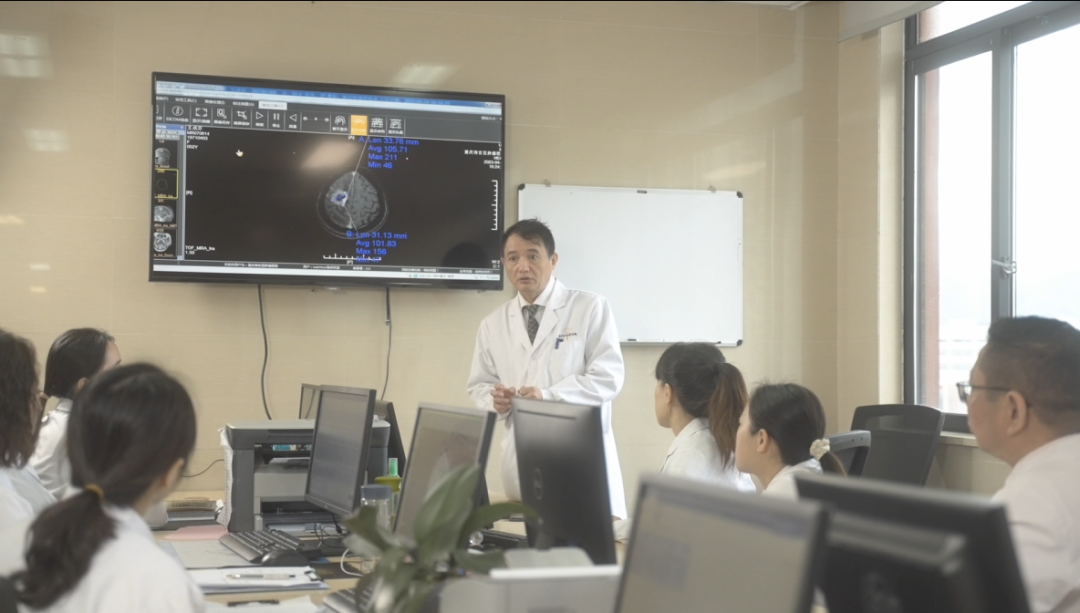
The National Gyro Knife Training Center at Chongqing HYGEIA Hospital: Experts lead national protocol development and hands-on training for radiotherapy teams across China.
5th-Generation Technology: Image-Guided + Dynamic Collimation
Many gamma knife systems currently in use across China remain at the 2nd or 3rd generation level, lacking image-guidance capabilities. Chongqing HYGEIA's Gyro Knife represents 5th-generation technology, featuring both image-guided radiotherapy (IGRT) and dynamic collimation. This places it among the most advanced systems nationally, with superior precision, safety, and broader clinical indications.
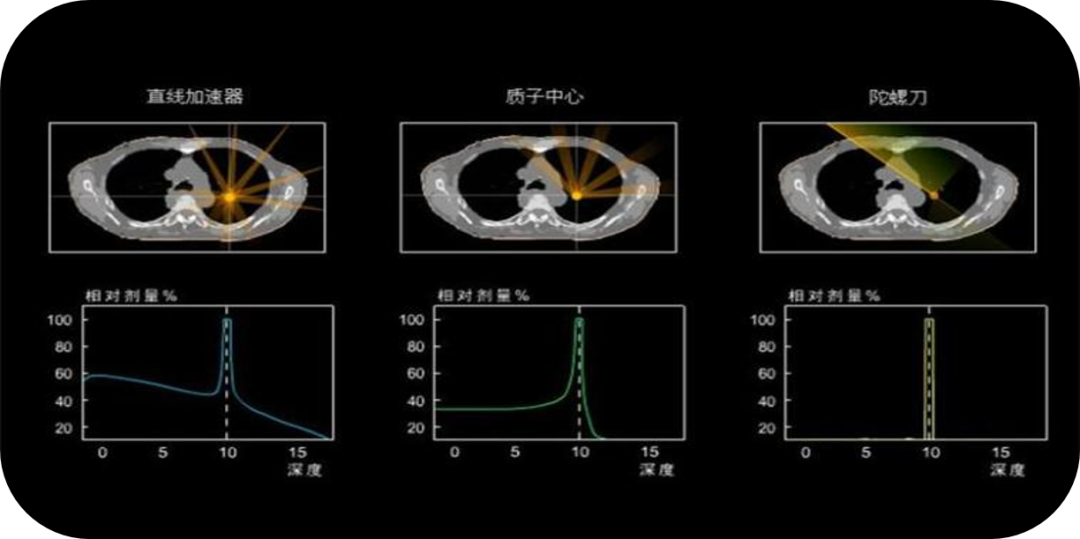
Radiotherapy comparison: Conventional linear accelerator (left), proton center (center), and HYGEIA's Gyro Knife (right). The Gyro Knife achieves superior dose concentration at the target with minimal scatter to healthy tissue.
The Patient Experience: As Simple as a CT Scan
Many patients receiving radiotherapy at Chongqing HYGEIA share a common experience: the treatment process is non-invasive, painless, and requires no hospitalization. A typical treatment session involves:
- Positioning: The patient lies comfortably on the treatment couch
- Image localization: Precise targeting using onboard imaging
- Treatment planning: Physics team verifies and optimizes the dose plan
- Beam delivery: The Gyro Knife rotates around the target, delivering precisely sculpted radiation
After treatment, patients typically resume normal daily activities without hospitalization. Most treatment courses are completed in fractions over several days.
How Costs Have Changed: Making Precision Radiotherapy Affordable
Historically, stereotactic radiotherapy carried a premium price tag due to equipment costs and technical complexity, putting it out of reach for many patients. This has now changed dramatically:
- Insurance coverage: Gyro Knife treatment is now included in China's national medical insurance reimbursement catalog
- Price reduction: Treatment costs have been reduced significantly, a decision driven by HYGEIA's ability to control equipment costs through self-manufacturing
- No compromise on quality: Despite the cost reduction, treatment quality remains at the highest level — patients receive the same 5th-generation technology, the same expert team, and the same rigorous physics verification
A Realistic Perspective: What Radiotherapy Can and Cannot Do
It's important to be clear: radiotherapy is not suitable for every tumor. It works best for solid tumors that are:
- Moderate in size
- Well-defined in boundaries
- Located in areas with controllable motion
- Not widely disseminated
For extensive metastasis, hematologic malignancies, very large tumors, or hollow gastrointestinal organ cancers, treatment typically requires combination approaches including chemotherapy, targeted therapy, immunotherapy, or surgery. Whether radiotherapy is appropriate should always be determined by a multidisciplinary team based on imaging, pathology, and the patient's overall condition.
Conclusion: From "Scorched Earth" to "Surgical Strike"
Cancer treatment has evolved from indiscriminate radiation to precision targeting. Modern radiotherapy no longer damages healthy tissue on its way to the tumor. It enables curative treatment for countless patients who cannot undergo surgery and significantly improves quality of life for those with advanced disease.
Chongqing HYGEIA Hospital's Oncology Center, powered by self-developed Gyro Knife technology and a nationally recognized expert team, is making advanced treatment more precise, safer, and more affordable. If you or a loved one is facing cancer treatment decisions and surgery is not feasible due to age or medical condition, the Gyro Knife — this "invisible blade" — may be the light you're looking for.
Considering Radiotherapy in China?
Contact HYGEIA Healthcare's international patient team to learn if Gyro Knife precision radiotherapy is right for you or your patient.
Book a Consultation— Chongqing HYGEIA Hospital, Brand & Communications Department —
← Back to News